Dr. Rahul Chauhan
Specialist in shoulder, knee, spine endoscopy and ultrasound guided orthopedic procedures.

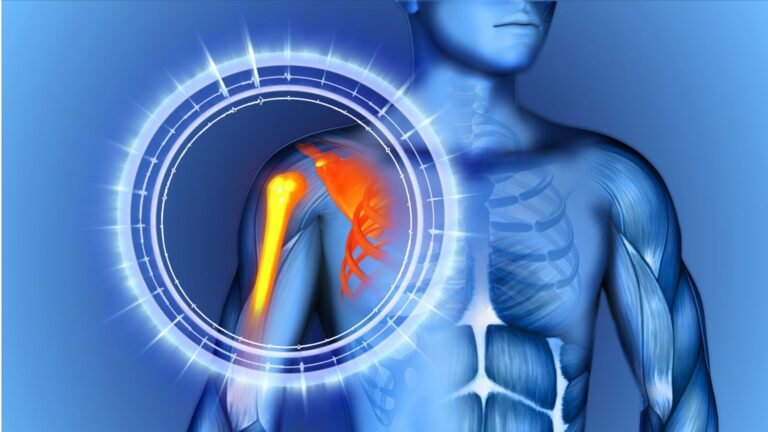
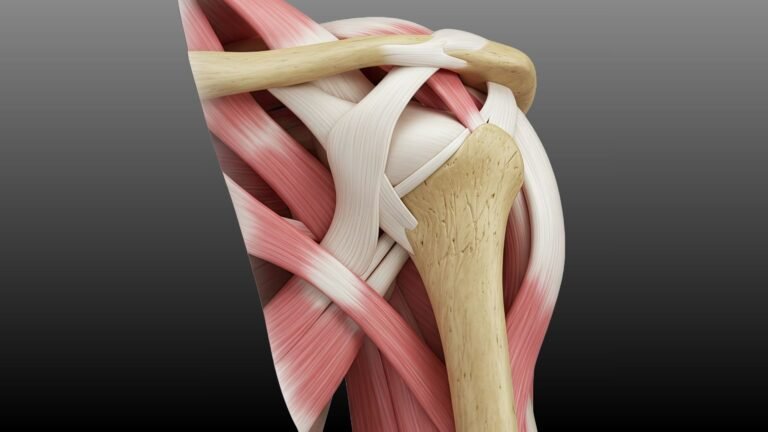
Frozen shoulder, also called adhesive capsulitis, is a painful condition in which movement of the shoulder becomes progressively restricted. This happens because the capsule surrounding the shoulder joint becomes inflamed, tight and thickened, eventually limiting motion.
People often notice that day-to-day tasks — such as reaching overhead, fastening clothes, or lying on the affected side — gradually become difficult or uncomfortable.
The exact cause is not always clear, but frozen shoulder is strongly linked with certain medical conditions. It occurs far more frequently in people with diabetes than in the general population.
Conditions commonly associated with frozen shoulder include:
Frozen shoulder may also develop:
Frozen shoulder typically progresses through three phases, and the duration varies from person to person.
| Phase | Duration | What Happens |
|---|---|---|
| Freezing Phase | ~3 to 6 months | Shoulder pain increases and movements become difficult, especially at extreme ranges |
| Frozen Phase | ~4 to 12 months | Pain gradually reduces, but stiffness becomes more severe |
| Thawing Phase | ~6 months to 2 years | Movement slowly improves in many patients; around 50% experience significant recovery |
Although the condition can resolve naturally over time, the recovery process is usually slow and can take many months to years without treatment.
Frozen shoulder is largely a clinical diagnosis — made through patient history and examination.
MRI is not essential for every case but may be advised when:
Most people improve without surgery, but treatment varies depending on severity and the stage of the condition.
1. Medications & simple measures
Pain-relieving and anti-inflammatory medicines, along with hot or cold therapy, often help in the early phase.
2. Physiotherapy / shoulder-specific exercises
Stretching and mobility exercises form the core of treatment. They help loosen the capsule, reduce stiffness and restore range of motion.
3. Injections (select cases)
If pain and stiffness continue despite therapy, one of the following may be recommended:
4. Surgical option (rare, for resistant cases)
When fibrosis is very severe and symptoms do not improve with conservative measures, arthroscopic shoulder arthrolysis (keyhole surgery) may be required to release the tightened capsule.
Frozen shoulder can be frustrating, but it is treatable. Most patients improve significantly with medications and exercises, while only a small percentage require injections or surgery. Early diagnosis and consistent physiotherapy help reduce pain and restore motion faster.