Dr. Rahul Chauhan
Sports Injury Specialist | Endoscopic Spine Surgeon | Ultrasound-Guided Orthopaedic Procedures

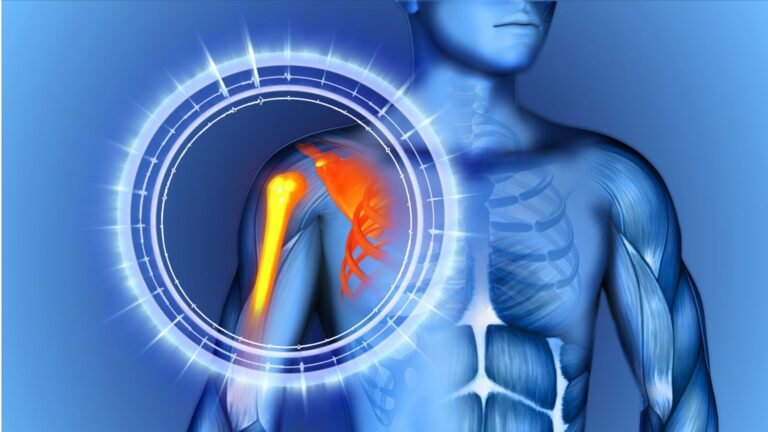
The rotator cuff is a group of four muscles and tendons that keep the shoulder joint stable and help you lift and rotate your arm. When one of these tendons gets damaged or pulled away from the bone, it is called a rotator cuff tear.
This injury can make daily tasks — like lifting the arm, combing hair, wearing clothes or reaching overhead — painful and difficult.
A tear can occur for different reasons:
Sometimes the pain starts suddenly, and other times it builds up slowly over months.
People with a rotator cuff tear often notice:
Ignoring these symptoms may cause the tear to get bigger over time.
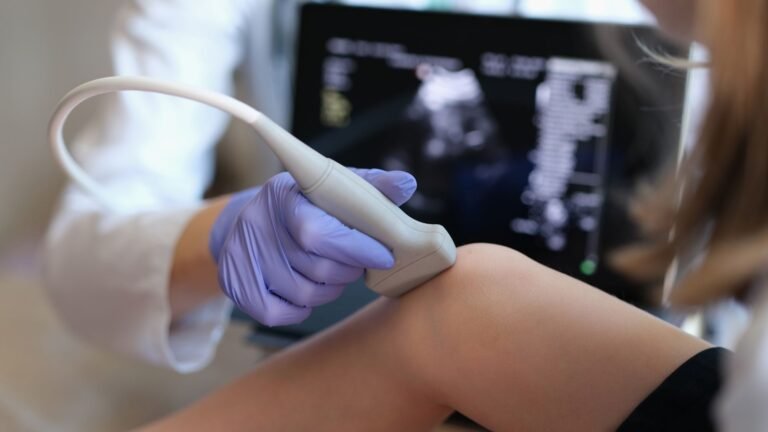
The diagnosis is usually made with:
The right treatment depends on the tear size, your age, your activity level and how much the symptoms affect daily life.
Small or partial tears often improve with:
Many people feel much better with consistent physiotherapy.
Surgery is usually advised when:
Arthroscopic rotator cuff repair is a keyhole surgery in which small cuts are made around the shoulder. A camera shows the tear on the screen, and the tendon is stitched back to the bone with anchors.
Benefits of arthroscopic repair:
Healing takes patience, as the tendon needs time to reconnect with the bone.
A general recovery pattern looks like this:
| Time Frame | What to Expect |
|---|---|
| First 4–6 weeks | Sling support; gentle passive exercises |
| 6–12 weeks | Active arm movement begins; light strengthening |
| 3–6 months | Stronger strengthening; return to most activities |
| 6–9 months | Full return to sports or gym (after clearance) |
Success depends greatly on regular physiotherapy and home exercises.
A rotator cuff tear is a common shoulder injury and can cause persistent pain if ignored. Most small tears improve with medicines and physiotherapy. Larger tears usually need arthroscopic repair to restore strength and prevent long-term shoulder problems.
With early diagnosis and the right treatment, most patients regain full function and a pain-free shoulder.